Publications

Sort by: |
Your search returned 1192 results
Generating Impact: Challenges Faced When Promoting the Adoption of Geographical Tools for Informing Public Policy

Drawing on the application of spatial analytical tools (based on floating catchment area (FCA) methods), this commentary highlights some of the challenges faced in promoting the use of geographical techniques to address aspects of government policy/delivery. There is an ever-expanding academic literature concerned with the application of FCA techniques in a range of thematic areas,…

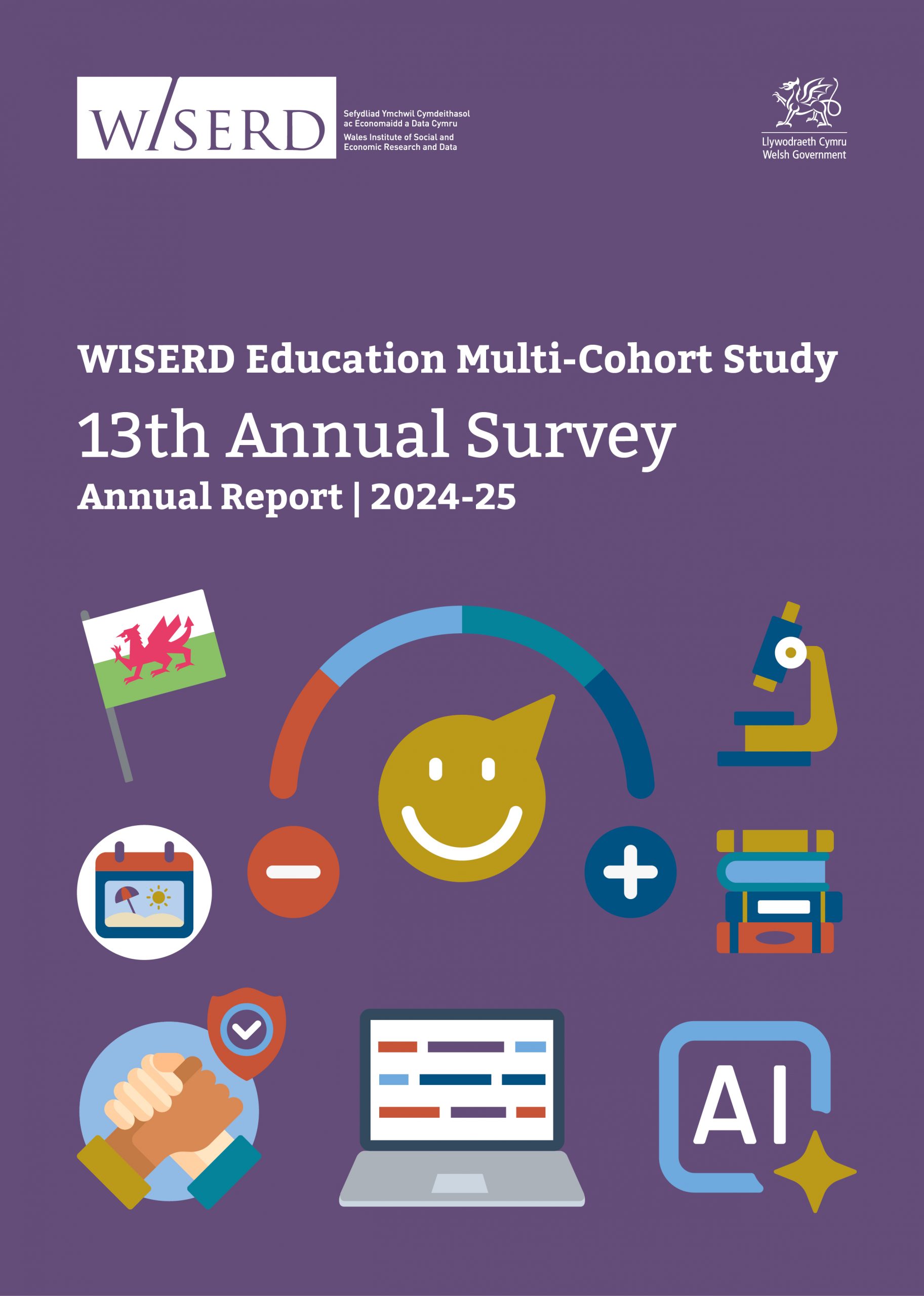
WMCS 13th Annual Survey Annual Report 2024-25 - front cover - ENG
WISERD Education Multi-Cohort Study 13th Annual Survey Annual Report | 2024-25

The WISERD Education Multi-Cohort Study (WMCS) is an annual longitudinal study to chart the progress of children and young people growing up in Wales. We follow cohorts from schools across Wales and ask questions about their experiences of school as well as their perspectives on current issues. This year, we included a set of questions…

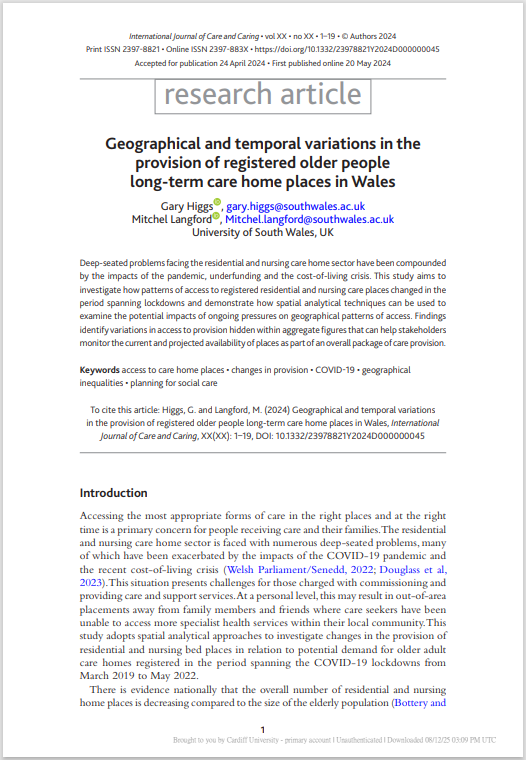
Geographical and temporal variations in the provision of registered older people long-term care home places in Wales

Accessing the most appropriate forms of care in the right places and at the right time is a primary concern for people receiving care and their families. The residential and nursing care home sector is faced with numerous deep-seated problems, many of which have been exacerbated by the impacts of the COVID-19 pandemic and the…

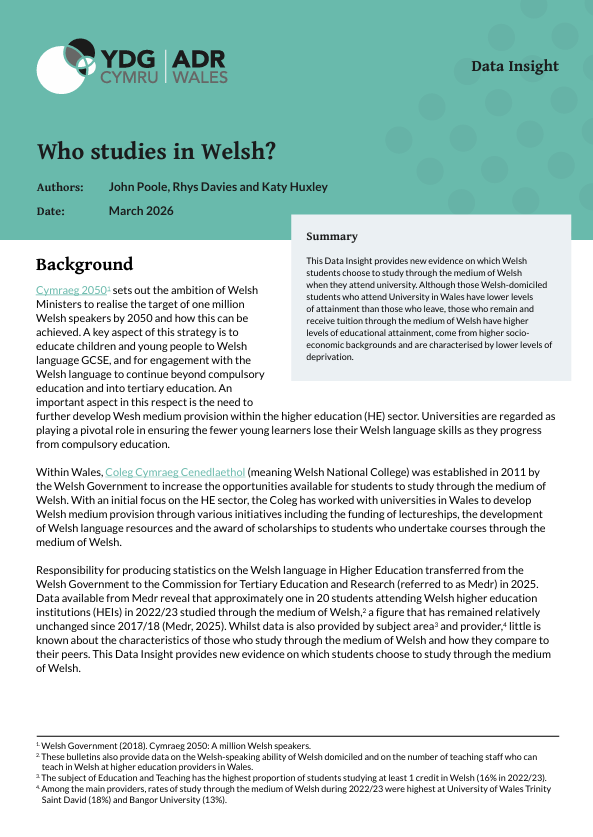
Who studies in Welsh?

This Data Insight provides new evidence on which Welsh students choose to study through the medium of Welsh when they attend university. Although those Welsh-domiciled students who attend University in Wales have lower levels of attainment than those who leave, those who remain and receive tuition through the medium of Welsh have higher levels of…

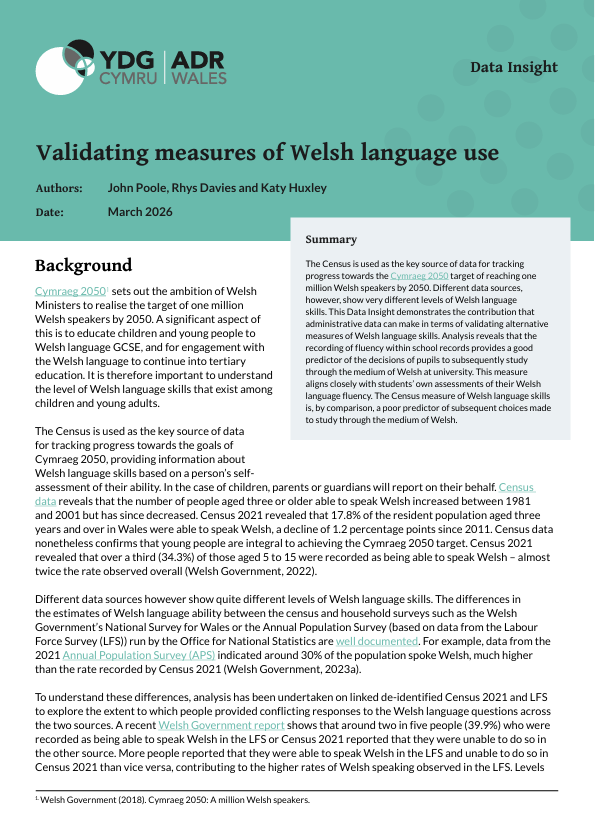
Should I stay or should I go? Exploring the university choices of Welsh students

This Data Insight examines the characteristics of university entrants who leave Wales for the purposes of education and compares them to those who stay. Those students who leave Wales to attend university have higher levels of educational attainment than those who remain. The Welsh language, deprivation and social class background also play a role, with…

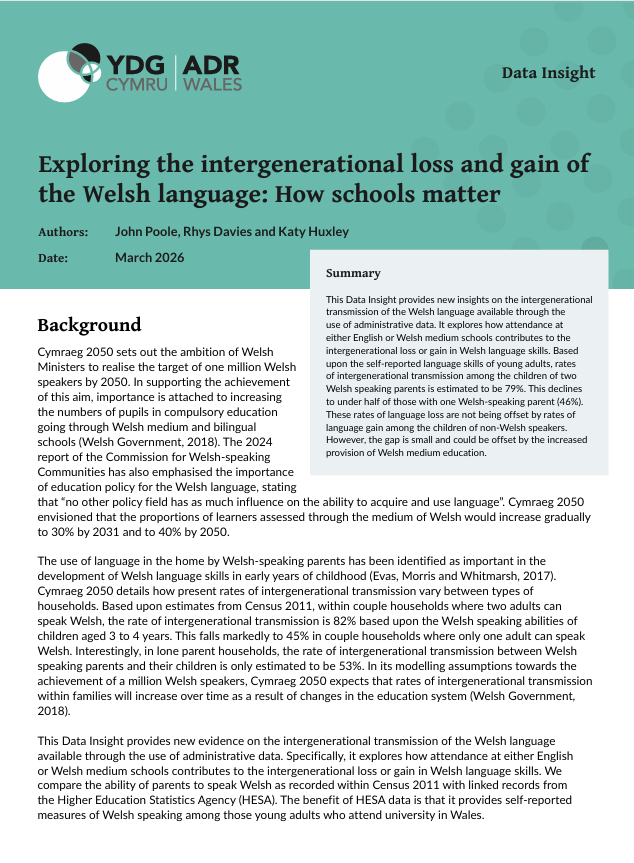
Who speaks Welsh? Insights into Welsh language ability from administrative data

This Data Insight uses linked administrative data to explore the levels of fluency in the Welsh language among different groups of young people in Wales at both compulsory and non compulsory stages of education. Forty percent of those children recorded as having no Welsh skills in the 2011 Census are recorded as being able to…

Non-Technical-Briefing-Paper-No.1-_-Bhil-_-01.12.25-front-cover
Indigenous Peoples’ Rights and Civil Society Action against Language Death and Cultural Oppression: Evidence and Lessons from India – Bhil Language and Culture

This briefing is from the project ‘Indigenous Peoples’ Rights and Civil Society Action against Language Death and Cultural Oppression: Evidence and Lessons from India’ funded by the Academy of Medical Sciences. The research explores the issues, challenges and lessons that emerge from civil society action to support indigenous languages and cultures. Specifically, we focus on…

Indigenous Peoples’ Rights and Civil Society Action against Language Death and Cultural Oppression: Evidence and Lessons from India – Irula Languages and Cultures

This is the second briefing from the project ‘Indigenous Peoples’ Rights and Civil Society Action’ funded by the Academy of Medical Sciences. Our research explores the issues, challenges and lessons that emerge from civil society action to support indigenous languages and cultures. Here we focus on the Irula tribe of Kerala. They are one of…