Publications

Sort by: |
Your search returned 1194 results
Generating Impact: Challenges Faced When Promoting the Adoption of Geographical Tools for Informing Public Policy

Drawing on the application of spatial analytical tools (based on floating catchment area (FCA) methods), this commentary highlights some of the challenges faced in promoting the use of geographical techniques to address aspects of government policy/delivery. There is an ever-expanding academic literature concerned with the application of FCA techniques in a range of thematic areas,…

WMCS 13th Annual Survey Annual Report 2024-25 - front cover - ENG
WISERD Education Multi-Cohort Study 13th Annual Survey Annual Report | 2024-25

The WISERD Education Multi-Cohort Study (WMCS) is an annual longitudinal study to chart the progress of children and young people growing up in Wales. We follow cohorts from schools across Wales and ask questions about their experiences of school as well as their perspectives on current issues. This year, we included a set of questions…

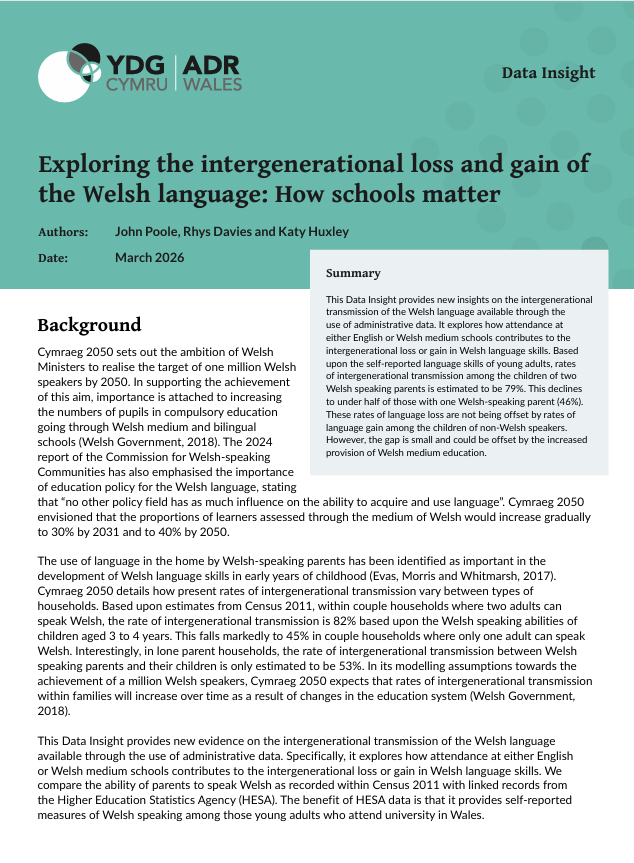
Exploring the intergenerational loss and gain of the Welsh language: How schools matter

This Data Insight provides new insights on the intergenerational transmission of the Welsh language available through the use of administrative data. It explores how attendance at either English or Welsh medium schools contributes to the intergenerational loss or gain in Welsh language skills. Based upon the self-reported language skills of young adults, rates of intergenerational…

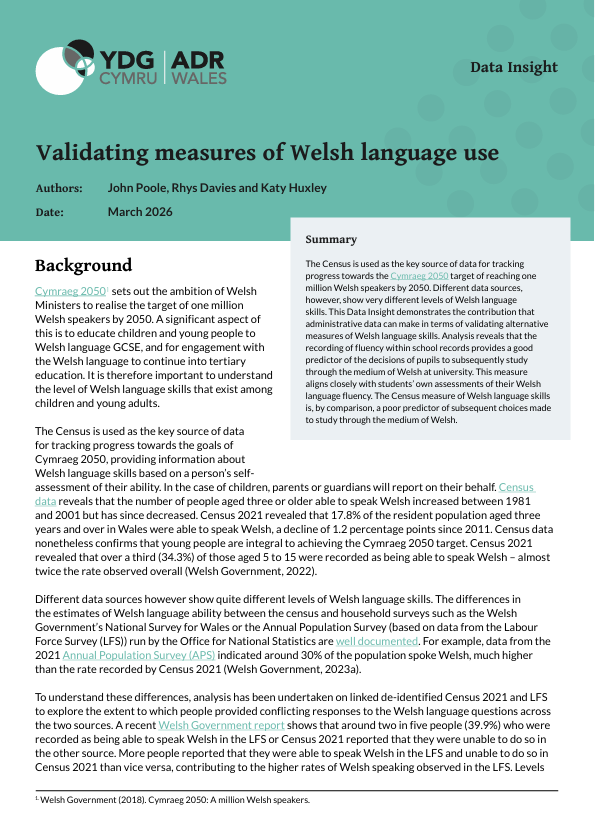
Validating measures of Welsh language use

The Census is used as the key source of data for tracking progress towards the Cymraeg 2050 target of reaching one million Welsh speakers by 2050. Different data sources, however, show very different levels of Welsh language skills. This Data Insight demonstrates the contribution that administrative data can make in terms of validating alternative measures…

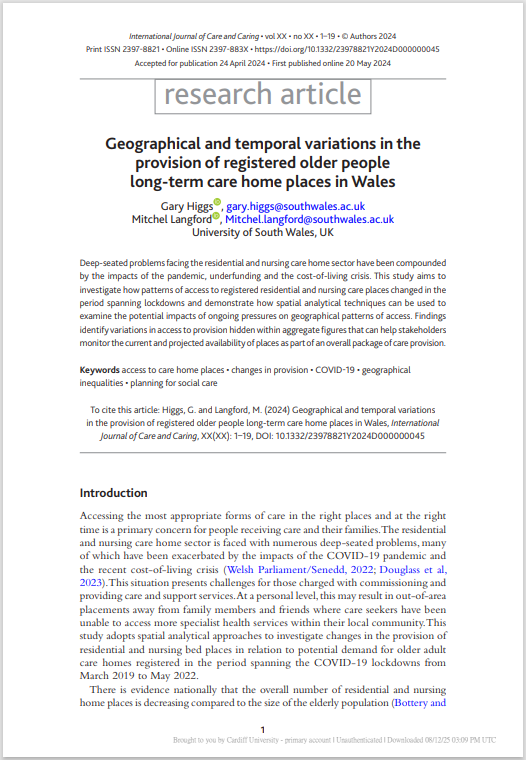
Geographical and temporal variations in the provision of registered older people long-term care home places in Wales

Accessing the most appropriate forms of care in the right places and at the right time is a primary concern for people receiving care and their families. The residential and nursing care home sector is faced with numerous deep-seated problems, many of which have been exacerbated by the impacts of the COVID-19 pandemic and the…

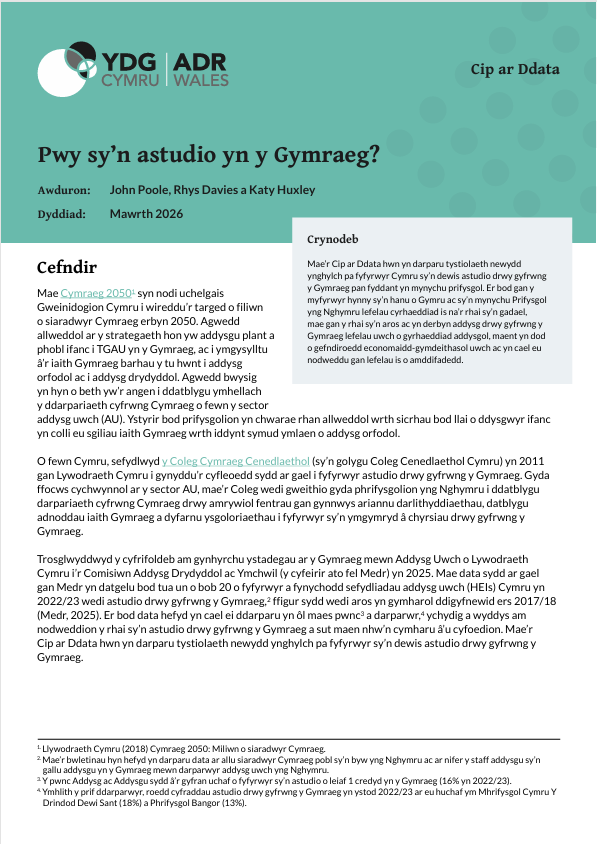
Who studies in Welsh?

This Data Insight provides new evidence on which Welsh students choose to study through the medium of Welsh when they attend university. Although those Welsh-domiciled students who attend University in Wales have lower levels of attainment than those who leave, those who remain and receive tuition through the medium of Welsh have higher levels of…

Who gets a graduate job? The impact of language and migration on the early careers of Welsh students

This Data Insight explores the influence of the Welsh language and migration on the probability that Welsh-domiciled graduates are in a graduate job around six months following the completion of their studies. Using linked administrative data combined with information from the Destinations of Leavers from Higher Education (DLHE) survey, we find that leaving Wales to…

Does it pay to speak Welsh?
Does it pay to speak Welsh? The impact of language and migration on the early careers of Welsh students

This Data Insight explores the influence of the Welsh language and migration on the earnings of Welsh domiciled graduates around six months following graduation. Using linked administrative data combined with information from the Destinations of Leavers from Higher Education survey, we find that those who either remain or return to Wales following graduation earn less…