Cyhoeddiadau

Trefnu yn ôl: |
Dychwelodd eich chwiliad 245 canlyniad
No Image
Cip ar Ddata: Pynciau gradd athrawon gwyddoniaeth yng Nghymru

Gan ddefnyddio data gweinyddol cysylltiedig o Gyfrifiad Blynyddol y Gweithlu Ysgolion (SWAC) a’r Asiantaeth Ystadegau Addysg Uwch (HESA), mae’r Cip ar Ddata hwn yn archwilio cefndiroedd gradd athrawon gwyddoniaeth sydd newydd gymhwyso yng Nghymru. Wrth wneud hynny, mae’n asesu aliniad rhwng arbenigedd pwnc gradd israddedig a dyraniad addysgu. Archwilir y patrymau hyn hefyd yn ôl…

No Image
Cip ar Ddata: Y gweithlu addysgu gwyddoniaeth yng Nghymru

Mae’r Cip ar Ddata hwn yn rhoi trosolwg o’r gweithlu addysgu gwyddoniaeth mewn ysgolion uwchradd a gynhelir gan y wladwriaeth yng Nghymru o 2021. Gan ddefnyddio data gweinyddol o Gyfrifiad Blynyddol y Gweithlu Ysgolion (SWAC), mae’n archwilio cyfran y gweithlu addysgu gwyddoniaeth sy’n cyflwyno pynciau unigol gwyddoniaeth, bioleg, cemeg a ffiseg, a sut maent wedi’u…

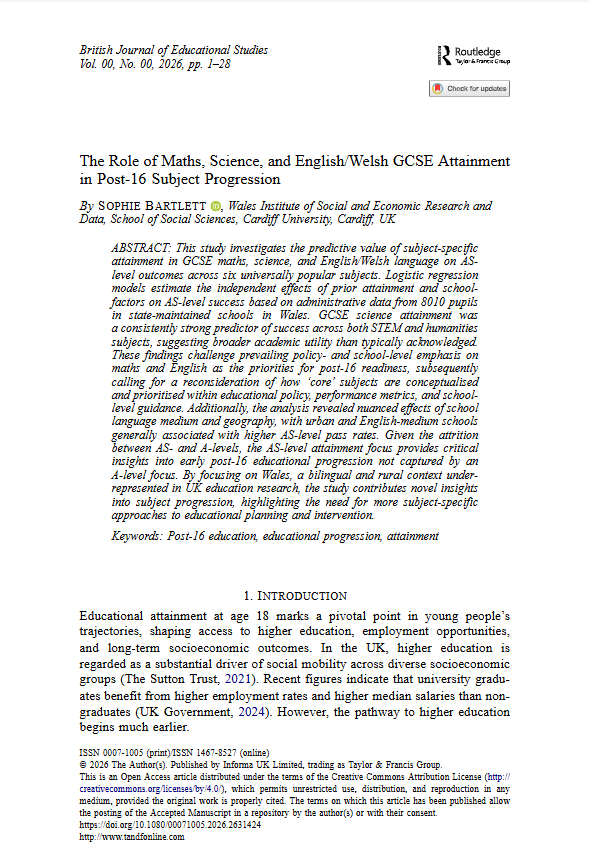
The Role of Maths, Science, and English/Welsh GCSE Attainment in Post-16 Subject Progression

This study investigates the predictive value of subject-specific attainment in GCSE maths, science, and English/Welsh language on AS-level outcomes across six universally popular subjects. Logistic regression models estimate the independent effects of prior attainment and school-factors on AS-level success based on administrative data from 8010 pupils in state-maintained schools in Wales. GCSE science attainment was…

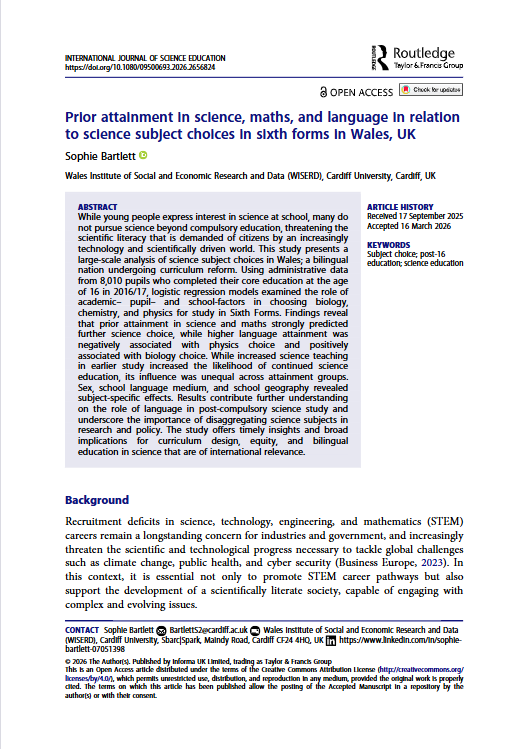
Prior attainment in science, maths, and language in relation to science subject choices in sixth forms in Wales, UK

While young people express interest in science at school, many do not pursue science beyond compulsory education, threatening the scientific literacy that is demanded of citizens by an increasingly technology and scientifically driven world. This study presents a large-scale analysis of science subject choices in Wales; a bilingual nation undergoing curriculum reform. Using administrative data…

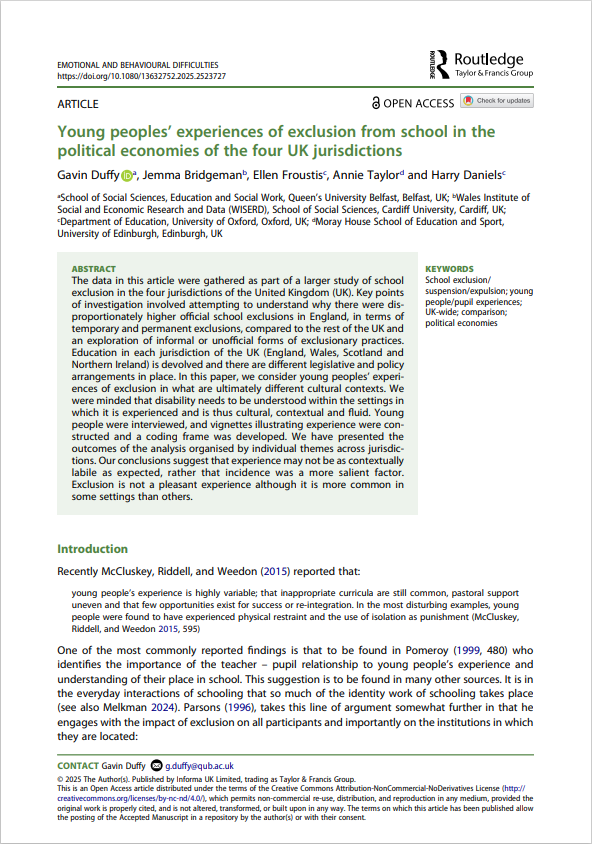
Young peoples’ experiences of exclusion from school in the political economies of the four UK jurisdictions

The data in this article were gathered as part of a larger study of school exclusion in the four jurisdictions of the United Kingdom (UK). Key points of investigation involved attempting to understand why there were disproportionately higher official school exclusions in England, in terms of temporary and permanent exclusions, compared to the rest of…

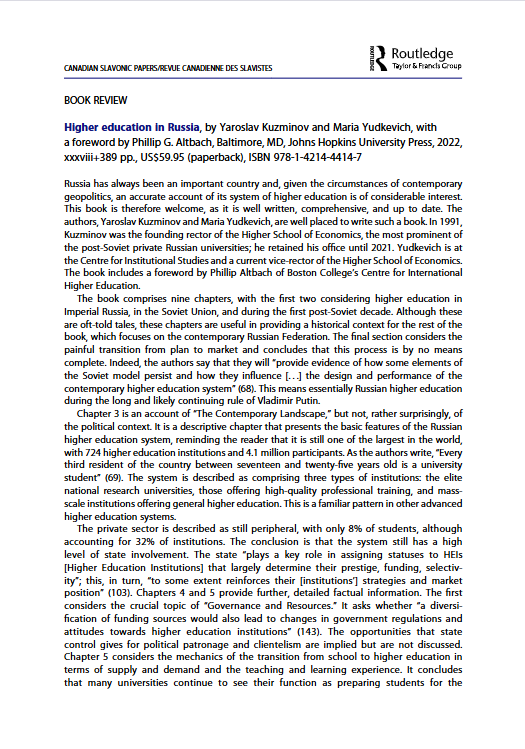
Higher education in Russia

Russia has always been an important country and, given the circumstances of contemporary geopolitics, an accurate account of its system of higher education is of considerable interest. This book is therefore welcome, as it is well written, comprehensive, and up to date. The authors, Yaroslav Kuzminov and Maria Yudkevich, are well placed to write such…

WISERD Education Multi-Cohort Study - 12th Annual Survey - report front cover
Astudiaeth Aml-garfan Addysg WISERD 12fed Arolwg Blynyddol Adroddiad Blynyddol | 2023-24

Mae Astudiaeth Aml-Garfan WISERD (WMCS) yn astudiaeth hydredol flynyddol i gofnodi cynnydd plant a phobl ifanc sy’n tyfu i fyny yng Nghymru. Bob blwyddyn, rydym yn dilyn tair carfan o ysgolion ledled Cymru ac yn gofyn cwestiynau am eu profiadau o’r ysgol a’u safbwyntiau ar faterion cenedlaethol a rhyngwladol. Yma, rydym yn darparu crynodeb o…

Parents’ perceptions of power in the school exclusion process examined through Arnstein’s ladder of participation

Parents have highlighted that they felt powerless in the school exclusion process because school staff speak louder and have all the authority. This study draws on Arnstein’s ladder of citizen participation to analyse parents’ experiences of the school exclusion process. At the bottom of Arnstein’s ladder is nonparticipation; citizens cannot participate in decision-making in this…

Can panoptic school infrastructure lead to disruptive and dangerous student behaviour which makes schools unsafe?

Having safe schools is of the upmost importance, but evidence has shown that school buildings often do not achieve this and that the most disadvantaged students get the worst provision. This research examines whether school buildings can create the conditions for disruptive behaviour. Using the example of the UK’s 21st Century Schools Programme, which has…